Cut Edge Corrosion Treatment
Cut edge corrosion treatment for profiled metal roofs — sealing the sheet edges, laps and fixings where corrosion starts.
Specialist Cut Edge Corrosion Treatment
Cut edge corrosion is your roof’s weakest point — and the cheapest thing on it to put right. We treat it before it turns into a replacement roof.
At Storm Coatings, we understand the importance of a healthy roof. But even the most robust metal roof cladding can succumb to a silent threat: cut edge corrosion.
What is cut edge corrosion?
Cut edge corrosion occurs where the pre-finished metal sheets are cut to size during installation. These exposed edges lose their protective coating, making them vulnerable to the elements. Over time, this exposure leads to:
- Rust and peeling — the raw metal begins to corrode, weakening the cladding and causing the protective coating to peel back further.
- Water ingress — the exposed, weakened edges become entry points for rainwater, leading to leaks and damage to the building’s structure and contents.
- Increased maintenance costs — left untreated, cut edge corrosion escalates into costly repairs, or a complete roof sheet replacement.
Why choose Storm Coatings for cut edge corrosion repair?
- Experienced professionals — a skilled, certified team with extensive experience in cut edge corrosion repair.
- Industry-leading systems — waterproof sealants designed specifically for metal roof cut edges.
- Long-term protection — years of protection, preventing further corrosion and saving money in the long run.
- Quick and efficient — we work to minimise disruption to your operation.
The benefits
- Extends the lifespan of your roof.
- Reduces the risk of leaks and water damage.
- Minimises future maintenance costs.
Early detection and treatment are what keep cut edge corrosion from turning into a replacement roof. If you are not sure what stage yours is at, we will come and look.
Why Choose Storm Coatings
Nationwide Coverage
Commercial and industrial roofs across the UK — single units to large estates.
No Strip-Out
Coatings applied over the existing roof — less waste, less cost, less downtime.
Up to 25-Year Guarantee
Long-life systems backed by a written guarantee.
Minimal Disruption
Cold-applied and low-odour, so you keep operating while we work.
Cut Edge Corrosion Coating Systems
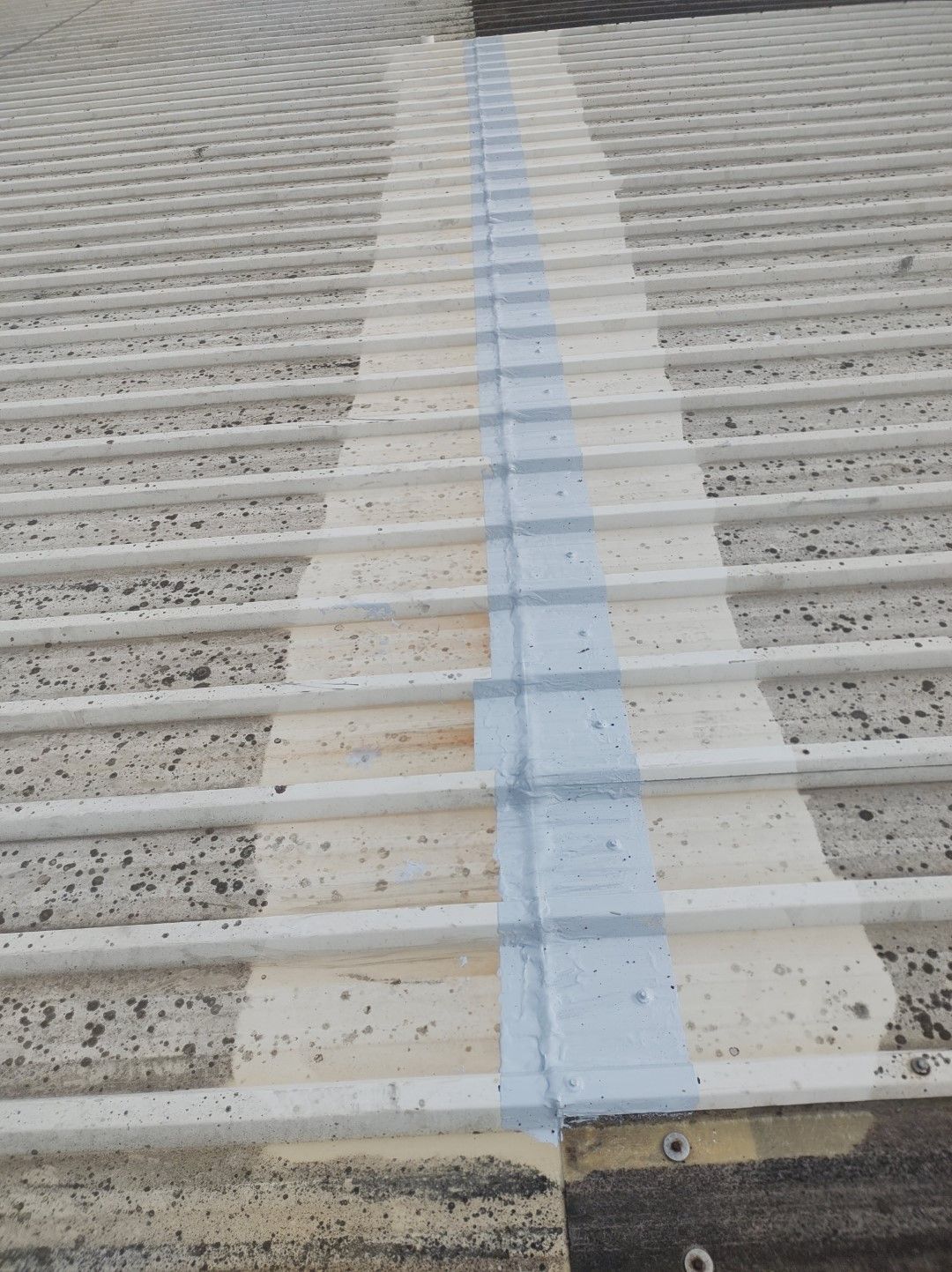
Our cut edge corrosion coating systems are specifically designed for profiled metal roofing. We use flexible, UV-stable coatings that bond to both the factory finish and the bare metal at cut edges. The system moves with the roof through thermal cycles without cracking or delaminating, providing long-term protection against further corrosion. All our cut edge corrosion coatings carry manufacturer guarantees of up to 25 years.
Cut Edge Corrosion Repair Process
Our cut edge corrosion repair process starts with a detailed roof survey to assess the extent of the corrosion and identify any secondary issues such as failing fixings, blocked gutters, or damaged flashings. We then clean and prepare the affected areas, stabilise any active corrosion with specialist primers, and apply the sealing coat system. The work is carried out from roof level with no disruption to the building operations below.
Cut Edge Corrosion Contractors
Storm Coatings are specialist cut edge corrosion contractors serving clients across East Anglia, the Midlands, and nationwide. We have treated hundreds of industrial and commercial roofs, from small workshop units to large distribution centres. If your metal roof is showing signs of rust at the sheet overlaps and edges, get in touch for a free cut edge corrosion assessment and quotation.
Frequently Asked Questions
What causes cut edge corrosion?
Cut edge corrosion occurs where factory-coated metal sheets are cut to size during installation. The exposed raw metal edge loses its protective coating and begins to corrode when exposed to moisture and air.
How do I know if my roof has cut edge corrosion?
Look for rust staining at sheet overlaps, peeling or flaking paint at sheet edges, and water stains on the underside of the roof. If you can see rust lines running along the sheet laps from ground level, corrosion is already well established.
Can cut edge corrosion be repaired without replacing the roof?
Yes — in most cases, cut edge corrosion can be treated in situ without removing or replacing any sheets. Our treatment seals the corroded edges and prevents further deterioration, adding years of life to the existing roof.
How long does cut edge corrosion treatment last?
Our treatments typically provide 15-20 years of protection. The exact lifespan depends on exposure conditions and the severity of the original corrosion.
Is cut edge corrosion covered by insurance?
Cut edge corrosion is generally considered a maintenance issue rather than an insurable event. However, the water damage caused by untreated corrosion may be covered. Early treatment is far more cost-effective than claiming for water damage.
Cut Edge Corrosion Treatment: How It Works and What It Costs
If you manage a metal-sheet roof and you’re starting to see rust streaks down the cladding, or bubbling and lifting at the sheet edges, you’re looking at cut edge corrosion. Left alone, it works its way under the factory coating and into the steel substrate — at which point you’re dealing with structural sheet failure rather than a surface repair. The good news is that cut edge corrosion treatment is a well-proven, cost-effective fix when caught early enough, and it can be done without stripping the roof or halting operations below.
What Is Cut Edge Corrosion and Why Does It Happen?
Steel roofing sheets are coated at the factory — but the edges where sheets are cut to length are left exposed. Those raw edges are where the factory coating ends, and they have no protection against moisture, UV or pollutants.
Over time, rainwater sits in the lap joints between sheets, the bare steel oxidises, and the corrosion begins to creep under the coating. The problem is more common on older Colorcoat, Plastisol or polyester-finish profiles, but it can affect any metal sheet roof. Buildings in coastal or industrial environments tend to see it faster, but given enough time and rainfall — this is the UK — most unprotected cut edges will corrode eventually.
It’s not a sign the roof was badly specified; it’s simply the nature of how profiled steel sheet roofing ages.
Early Signs Your Roof Sheets Need Treatment
The most obvious sign is rust-coloured streaking down cladding sheets. On the roof itself, you’ll often see white or brown blistering along the sheet overlaps, or the factory coating lifting away from the edge in flakes.
In worse cases, the steel underneath has gone visibly thin and pitted. At that stage, treatment is still possible but the prep work is more involved, and in isolated areas you may need section repairs before coating.
If you’re not sure what you’re dealing with, a drone survey or a straightforward roof inspection will tell you clearly whether you’re at the early, mid or late stage — and that determines which system is right for the job. Getting it assessed now is significantly cheaper than leaving it another two or three winters.
The Cut Edge Corrosion Treatment Process
The treatment process follows a consistent sequence regardless of roof size.
First, the sheet edges and lap details are mechanically cleaned — wire brushing or grinding back any loose rust, flaking coating and contamination. Any sealant that’s cracked or debonded is removed.
Next, a rust-inhibiting primer is applied to the bare metal. This chemically converts residual surface rust and provides a stable base for the topcoat system.
The lap joints are then sealed with a flexible sealant or mastic — this is the stage that deals with the water ingress point directly. A waterproof membrane or elastomeric coating is then applied over and beyond the edge detail, typically extending onto the sheet face to create a proper weatherproof seal.
Systems like TOR UNI-Cover and seamsil are well-suited to this type of detail work. The finish coat ties the repair into the broader roof surface and provides the UV resistance the original mill coating no longer offers.
Colour Matching: Will the Treatment Be Visible?
This is one of the most common questions we get, and it’s a fair one. The honest answer is that a perfect match to a weathered, aged roof is rarely achievable — the existing sheets will have faded and discoloured over the years, and a fresh coating will sit slightly differently.
What we can do is get close. We work from standard RAL or BS colour references, and in practice the repaired edges and lap details blend reasonably well once the coating has had a chance to weather. On a pitched roof viewed from ground level, the treatment line isn’t usually conspicuous.
If appearance is a significant concern — particularly on a prominent building or a client-facing facility — the most practical option is a full roof coating applied across the whole surface. That delivers a uniform finish and addresses the cut edge detail in the same programme of work.
How Long Does Treatment Take?
For a typical single-storey industrial unit or warehouse with straightforward lap detail access, cut edge corrosion treatment is usually a one- to three-day job. Larger roofs, multiple bays, or significant prep requirements will add to that.
Weather plays a part — the primer and coating systems need dry, frost-free conditions to cure properly, so scheduling around the forecast is part of how the work is planned.
The job can almost always be carried out while the building is occupied. There’s no need to clear the warehouse floor or suspend operations, though access to the roof interior may be needed if there’s any internal inspection required. We’ll confirm logistics clearly before works start so there are no surprises.
Lead times from survey to start vary depending on programme .
Cost Guide for Cut Edge Corrosion Works
Cut edge corrosion repair cost depends on three main factors: roof size, the severity of the corrosion, and whether there are any additional defects (failed ridge cappings, damaged rooflights, corroded fixings) that need attending to in the same visit.
As a rough guide, treatment to a straightforward single-bay industrial roof will cost considerably less than a full re-roof, which is the alternative if corrosion is left to progress too far. Treating early is almost always the better financial decision.
We price cut edge corrosion work per linear metre of edge detail treated, or as a lump sum for the full roof programme — whichever is more useful for budgeting purposes. We can work to a schedule of rates for facilities managers and property portfolios where multiple roofs need pricing at once.
To get an accurate figure, a survey is needed. We don’t quote cut edge corrosion works blind — there’s too much variation in condition and access to make a meaningful number without seeing the roof.
Book a Cut Edge Corrosion Survey
If you can see rust streaking, edge blistering or lap-joint deterioration on a metal sheet roof, the right first step is a survey rather than a quote off a spreadsheet. The condition of the steel underneath the coating determines everything — what system is appropriate, how much prep is involved, and what the finished result will look like.
We cover industrial and commercial roofs across the UK from our Norfolk base, working regularly across East Anglia, the Midlands and beyond. Surveys can be arranged to suit site access requirements, and we can provide a written report alongside the quotation if that’s useful for budget sign-off or maintenance records.
Contact us to arrange a cut edge corrosion survey, or to talk through what you’re seeing on your roof before committing to anything.
Frequently Asked Questions
Can cut edge corrosion treatment be applied to lap details specifically, without treating the whole roof? Yes. Treatment can be targeted at the edge and lap details only, which is often the most cost-effective approach when the main sheet area is still in reasonable condition. The scope is defined by what the survey shows, not a one-size-fits-all programme.
How long does the treatment last? That depends on the system used and the condition of the substrate going in. A well-prepared, properly applied treatment to a roof that isn’t too far gone should give years of protection before re-treatment is needed.
Will the building need to be empty while the work is carried out? In most cases, no. Cut edge corrosion treatment is typically done from the outside, and the works don’t normally require the building to be vacated. We’ll confirm the specific requirements once we’ve seen the roof.
CONTACT US
Got a question or want a quote? Fill in the form below and we’ll be in touch..
LOCATION
38 Whitsands Road Swaffham
Norfolk United Kingdom PE37 7BY
Norfolk United Kingdom PE37 7BY
CALL US
01760 613186
EMAIL US
info@stormcoatings.co.uk
Our Process
1
Site Survey
We assess substrate, detailing, upstands and penetrations.
2
Specification
A system specified to suit your roof and any consultant spec.
3
Written Quote
A clear, documented quote for board or budget sign-off.
4
Installation
Cold-applied and seamless, around your operation.
5
Guarantee
A written guarantee of up to 25 years on completion.
Get a Free Roof Survey
No-obligation site visit, condition assessment and written quote.
Specialist commercial & industrial roof coating contractors based in Swaffham, Norfolk.
Services
Flat Roof Refurbishment
Metal Roof Coatings
Cladding Spraying
Cut Edge Corrosion
Gutter Systems
Asbestos Waterproofing
Company
Home
About Us
Case Studies
Areas We Cover
FAQs
Contact
Get in touch
38 Whitsands Road,
Swaffham, Norfolk
PE37 7BY
01760 613186
info@stormcoatings.co.uk
© 2026 Storm Coatings Ltd. All rights reserved. | Site by Anglia Computer Solutions.