Commercial Roofing Contractors
Storm Coatings are trusted commercial roofing contractors delivering expert commercial roof repair, protective coatings and ongoing commercial roof…
Specialist Commercial Roofing Contractors
Storm Coatings are trusted commercial roofing contractors delivering expert commercial roof repair, protective coatings and ongoing commercial roof maintenance for offices, retail units, schools, healthcare facilities and public buildings across the UK. Our specialist refurbishment approach saves you up to 70% compared to full roof replacement — with minimal disruption and guarantees of 20 years or more.
From a single leaking flat roof to a multi-site maintenance programme, our experienced team provides tailored solutions that keep your commercial property watertight, energy-efficient and compliant for decades to come.
Why Choose Storm Coatings
Nationwide Coverage
Commercial and industrial roofs across the UK — single units to large estates.
No Strip-Out
Coatings applied over the existing roof — less waste, less cost, less downtime.
Up to 25-Year Guarantee
Long-life systems backed by a written guarantee.
Minimal Disruption
Cold-applied and low-odour, so you keep operating while we work.
Commercial Roof Repair and Refurbishment You Can Rely On
Commercial buildings come in all shapes and sizes, but they share one thing in common: a roof that must perform faultlessly to protect the people, assets and operations inside. When leaks appear, insulation fails or corrosion takes hold, the consequences can be severe — water damage to interiors, disruption to business, health and safety risks and spiralling repair costs.
As specialist commercial roofing contractors, Storm Coatings focus on what matters most: getting your roof back to full performance quickly, affordably and with the least possible disruption to your business. We do not rip off and replace unless it is genuinely the only option. Instead, we use advanced liquid-applied coatings, waterproofing membranes and targeted repair techniques to restore and protect your existing roof system.
We work with all common commercial roof types — flat roofs, pitched metal profiles, built-up felt systems, asphalt, single-ply membranes, asbestos cement and fibre cement sheets. Every project starts with a comprehensive free survey, so we understand exactly what your roof needs before we quote.
Liquid Roof Coatings for Commercial Buildings
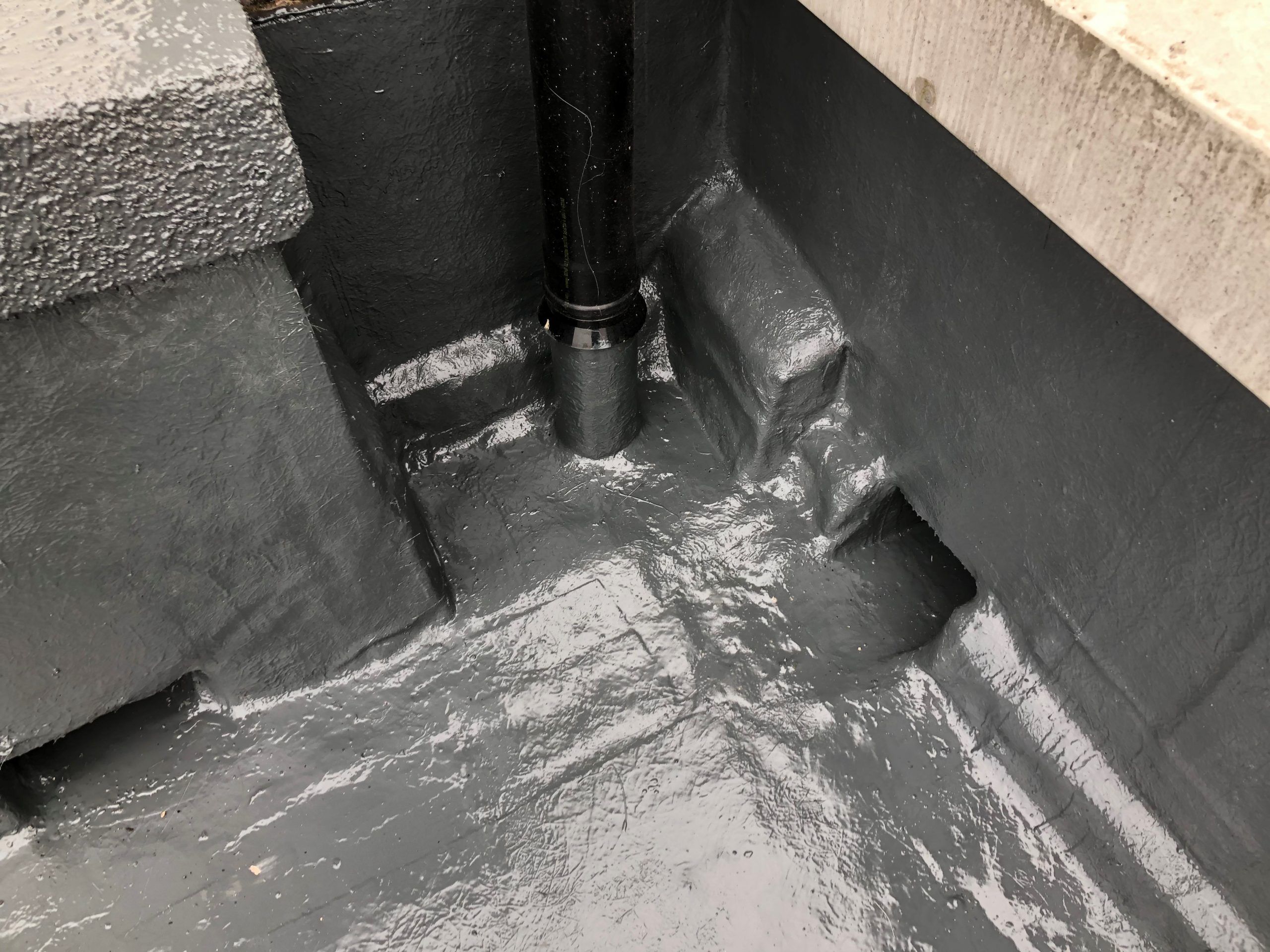
Our liquid-applied roof coatings form a seamless, fully bonded waterproof membrane over your existing roof surface. They eliminate leaks, halt corrosion and dramatically improve weather resistance — all without the need to strip the existing roof covering. A single application can extend the life of your commercial roof by 20 years or more, making it one of the most cost-effective commercial roof repair solutions available.
We use a range of proven coating systems to match the specific requirements of each project, including systems rated for foot traffic, high UV exposure and ponding water. Our coatings also improve thermal reflectivity, helping to reduce solar heat gain and lower cooling costs during the warmer months.
Commercial Roof Maintenance Programmes
Prevention is always better — and cheaper — than cure. Our commercial roof maintenance programmes are designed to identify and address minor issues before they become major problems. Regular inspections, gutter clearing, sealant renewal and targeted spot repairs can add years of life to your roof and avoid costly emergency call-outs.
We offer bespoke maintenance agreements tailored to the age, type and condition of your roof. Whether you manage a single building or a portfolio of commercial properties, we can design a programme that keeps every roof in top condition year-round.
Gutter Lining and Drainage Solutions
Blocked, corroded or failed gutters are one of the most common causes of water ingress in commercial buildings. Our Plygene gutter lining system provides a permanent, maintenance-free solution that prevents leaks and eliminates the need for repeated gutter repairs. We completed 145 metres of Plygene gutter lining at a distribution centre in Milton Keynes — solving persistent leaks that had caused significant damage to stock and equipment.
Cut-Edge Corrosion Treatment
Metal-clad commercial buildings are particularly susceptible to cut-edge corrosion, where exposed steel edges rust and delaminate over time. Our specialist treatment arrests the corrosion, seals the affected edges and provides lasting protection — at a fraction of the cost of re-cladding the entire roof.
Benefits of Choosing Storm Coatings
- Save 50–70% vs full replacement — our commercial roof repair and coating solutions deliver exceptional value compared to stripping and re-roofing.
- Minimal disruption to your business — all work is carried out from above with no need to vacate the building, close to customers or halt operations.
- 20+ year guarantees — manufacturer-backed guarantees give you long-term confidence in the performance of your roof.
- Improved energy efficiency — reflective coatings reduce heat absorption, lowering air conditioning costs and improving occupant comfort.
- Compliance and safety — our systems help you meet building regulations and insurance requirements for roof condition and waterproofing.
- Sustainable approach — refurbishment avoids landfill waste and reduces the carbon footprint of roof maintenance.
- Free surveys and transparent pricing — no hidden costs, no obligation, and no pressure.
- UK-wide coverage — based in Norfolk, our commercial roofing contractors work on projects across England, Scotland and Wales.
Sectors We Work With
Our commercial roofing contractors have completed projects across a wide range of sectors, including:
- Offices and business parks — headquarters, serviced offices, co-working spaces
- Retail — high street shops, shopping centres, retail parks, supermarkets
- Education — schools, colleges, universities, academies
- Healthcare — hospitals, clinics, care homes, dental surgeries
- Leisure and hospitality — hotels, restaurants, gyms, sports centres
- Public sector — council buildings, libraries, community centres, emergency services
- Places of worship — churches, chapels, village halls
No matter the size or complexity of your commercial building, Storm Coatings have the expertise to deliver a roofing solution that fits your requirements and your budget.
Frequently Asked Questions
What types of commercial roof can you repair?
We work with virtually all commercial roof types, including flat roofs (felt, asphalt, single-ply, EPDM), pitched metal profiles, asbestos cement, fibre cement and concrete. Our liquid-applied coatings and waterproofing systems can be tailored to suit the specific substrate and condition of your roof. If you are unsure whether your roof is suitable, our free survey will give you a clear answer.
How long does a commercial roof coating take to apply?
Timescales depend on the size and condition of the roof, but most commercial projects are completed within one to two weeks. Preparation work — cleaning, repairing damaged areas and priming — typically accounts for the majority of the programme. The coating itself cures quickly, often within hours, meaning your roof is fully waterproof very soon after application.
Do you offer emergency commercial roof repair?
Yes. We understand that a leaking roof cannot wait, so we offer a rapid-response commercial roof repair service for urgent situations. We will carry out a temporary repair to stop the immediate leak, then provide a permanent solution and quotation. Call us on 01760 613186 to discuss your emergency.
How much does commercial roof maintenance cost?
Our commercial roof maintenance programmes are tailored to each property, so costs vary depending on the roof size, type and condition. As a guide, regular maintenance is a small fraction of the cost of reactive repairs and is one of the most effective ways to extend the life of your roof. Contact us for a bespoke maintenance proposal for your building or portfolio.
What Happens During a Roof Coating Site Survey?
If you’re managing a commercial or industrial property and the roof is starting to show its age, the first question is usually straightforward: what’s the actual state of it, and what will it cost to fix? Getting an accurate answer means getting someone on-site. A roof coating specification that isn’t based on a proper survey is guesswork — and guesswork leads to cost overruns, wrong products, and systems that fail early. This page explains what a Storm Coatings site survey involves, what we look at, how long it takes, and what documentation you get at the end of it.
Why a Site Survey Is Essential Before Any Roof Coating
No two roofs are the same, even when they look identical on a drawing. A profiled steel sheet roof on a 1990s distribution unit will have different failure points from a built-up felt system on a 1970s school block. The substrate condition, existing coatings, lap joint integrity, fastener corrosion, and drainage layout all affect what system is appropriate — and what it will cost.
Quoting from photographs alone is possible for a rough budget figure, but a formal specification for tender or procurement purposes requires a physical inspection. For facilities managers putting a project to tender, or main contractors requiring a subcontractor quote, a properly documented survey is the starting point for a credible specification. Skipping it typically means revisiting costs once work has started — which nobody wants.
What Our Surveyors Assess on Visit
During an industrial roof inspection before coating, the surveyor works systematically across the roof surface. The core areas assessed include:
- Sheet condition — checking for corrosion, delamination, punctures, and distortion, particularly on older profiled metal roofs
- Cut edge corrosion — a common failure point on metal roofs where factory coatings have failed along lapped edges
- Lap joints and fixings — assessing sealant condition, fastener corrosion, and any movement or displacement
- Existing coatings — if a previous coating has been applied, its adhesion and condition affect whether it needs to be removed or can be overcoated
- Falls and drainage — ponding water is one of the most damaging factors for any flat or low-pitch roof
- Penetrations and upstands — rooflights, vents, gutters, and parapet details are common leak points and need specific treatment
The surveyor photographs each issue area and notes any access requirements, safety considerations, or scheduling constraints that would affect the project.
How to Prepare Your Site for a Survey
Preparation is usually minimal, but there are a few things that make a survey run more efficiently. If the roof has any restricted access areas — plant rooms, operational equipment beneath rooflights, or security-controlled zones — it helps to have those arranged in advance. Let us know if scaffold or MEWP access is already in place, or if we’ll need to arrange our own.
For larger sites or tender projects, a site plan or roof layout drawing is useful but not essential — our surveyors will produce their own record of the roof area as part of the process. If there’s a specific area of concern (an active leak, for example, or a section that was previously repaired), marking that location or having someone available to point it out saves time on the day.
For occupied buildings such as schools, hospitals, or leisure centres, it’s worth confirming any access restrictions or timing requirements ahead of the visit.
Remote Assessment: Can Photos Replace a Site Visit?
In some cases, a preliminary remote assessment is useful — particularly when a building owner or facilities manager wants a rough budget figure before committing to a full survey, or when a site is at a significant distance and a decision on whether to proceed needs to be made first.
If you can supply good-quality photographs of the roof surface, gutters, eaves details, and any specific problem areas, we can often give a indicative cost range and advise on the most likely specification route. This works reasonably well for straightforward projects — a single-span steel roof in reasonable condition, for example.
However, for anything involving asbestos cement sheets, an unknown substrate, active leaks with unclear source, or a project going to formal tender, a physical roof condition assessment is necessary. A written specification based on remote photos alone isn’t something we’d stand behind for procurement purposes.
From Survey to Specification: What Happens Next
After the site visit, the surveyor compiles a written report covering roof area measurements, condition notes, photographic evidence, and a recommended treatment approach. For straightforward projects this can be turned around promptly. For larger or more complex sites, the report may also include a schedule of works and a phasing recommendation — useful where a building needs to remain operational throughout.
The specification will reference the appropriate system for the substrate and condition found. On a metal roof with cut edge corrosion, that might mean a Seamsil or similar liquid-applied system with specific lap joint treatment. On a flat roof requiring full waterproofing, an Elastaseal Z polyurathane or comparable membrane system might be specified. The report gives you the basis for a like-for-like tender comparison, rather than comparing quotes that are based on different assumptions.
We also flag any items that fall outside the coating scope — structural issues, asbestos concerns requiring a licensed contractor, or drainage work that should be addressed separately.
How Quickly Can We Attend Your Site?
Responsiveness matters, particularly when a project is on a tender timeline or a leak is causing operational disruption. We cover sites across the UK from our Norfolk base, with regular work across East Anglia, the Midlands, and further afield — so attendance isn’t generally a problem for most locations.
For urgent situations — an active leak on a trading estate or a facilities manager needing a report before a board meeting — we’ll do what we can to prioritise. For planned tender surveys, 2-3 days is usually sufficient notice to schedule attendance.
If you’re a main contractor requiring a subcontractor to attend a site meeting as part of a tender process, we’re set up for that. We attend site meetings, provide written specifications, and can contribute to pre-construction documentation where required.
Book a Site Survey with Storm Coatings
If you’re at the stage where you need a proper roof condition assessment — whether that’s for a tender package, an insurance report, a planned maintenance budget, or simply to understand what your roof actually needs — the next step is straightforward.
Contact us with the site location, a brief description of the roof type if known, and any relevant timing requirements. We’ll confirm attendance, let you know what to have ready, and follow up with written documentation after the visit. There’s no obligation beyond the survey itself, and the report gives you something concrete to work from whether you proceed with Storm Coatings or not.
Call us or use the contact form on this site to arrange a free roof survey for your commercial building.
Frequently Asked Questions
Do you charge for a roof survey? For most commercial and industrial projects, the initial site survey is provided at no charge. If a project is particularly remote or involves significant travel, .fee will be agreed
Will I receive a written report after the survey? Yes. Every survey results in a written condition report with photographs, area measurements, and a recommended specification. This is suitable for use in tender documentation or internal sign-off processes.
Can you survey roofs containing asbestos cement sheets? Yes. Asbestos cement roofing is common on older industrial and agricultural buildings, and encapsulation is one of our services. The survey will note the presence of asbestos-containing materials and factor that into the specification. We do not carry out asbestos removal — if removal is required rather than encapsulation, we’ll advise accordingly and that element would need a licensed contractor.
How Long Does a Commercial Roof Coating Project Take?
If you’re trying to plan maintenance works around an operational building, a vague answer from a contractor is the last thing you need. Facilities managers, procurement teams, and building owners all need to know when work starts, how long it runs, and when the site will be handed back. The honest answer is that project duration depends on several variables — roof size, access, coating system, and the weather chief among them. This article sets out what realistically affects a roof coating project timeline in the UK, and how Storm Coatings plans and communicates a programme of works so you’re never left guessing.
Key Factors That Affect Project Duration
No two commercial roofing projects run to exactly the same schedule. The main variables that determine how long an industrial roof coating takes are:
Roof size and complexity — A straightforward 500m² portal-frame roof is a very different proposition from a 3,000m² multi-bay facility with rooflights, upstands, penetrations, and internal gutters.
Surface preparation requirements — If there’s significant cut edge corrosion to treat, old coating to degrease and abrade, or areas of delamination to repair before waterproofing begins, that work adds time before a single coat is applied.
Coating system — A single-coat maintenance system applies differently from a full liquid waterproofing build-up involving primer, reinforcement membrane, and two finish coats. Systems like Unicover ultra or Delcote 25 require specific dwell times between coats.
Access arrangements — Scaffold, MEWP, or rope access all carry different setup and strike times that affect the overall programme of works.
Operational constraints — Some sites can only be worked on outside business hours or in sections to keep the building operational below.
Typical Timelines by Roof Size and Type
As a rough guide:
-
Small commercial roofs (up to 500m²) — Generally 2–5 working days for a standard coating application once preparation is complete. Add 1–2 days if cut edge corrosion treatment or minor repairs are needed first.
-
Medium roofs (500m²–2,000m²) — Typically 1–3 weeks depending on coating specification and access method.
-
Large industrial roofs (2,000m²+) — Multi-week programmes are normal, often phased across bays to keep disruption manageable. Projects of this scale will have a detailed schedule of works agreed before mobilisation.
These are working estimates, not guarantees. How long an industrial roof coating takes will always depend on the condition found on the day and how the weather behaves. What Storm Coatings will always do is give you a realistic programme upfront rather than an optimistic one that slips.
Weather Windows and Seasonal Scheduling
This is the factor most clients underestimate. Liquid waterproofing and most roof coating systems require dry conditions and surface temperatures above a minimum threshold — typically 3°C above the dew point, though specific product requirements vary. In the UK, that rules out application during frost, active rain, or high humidity.
This doesn’t mean roof coating work stops entirely in winter — it means scheduling becomes more careful. Storm Coatings works across East Anglia, the Midlands, and beyond, and we monitor forecasts closely around planned application days. If conditions deteriorate, works are paused rather than pushed through, because a coating applied in marginal conditions will fail prematurely.
For time-critical projects, we’ll discuss the realistic weather risks upfront and build contingency into the programme. Spring through early autumn generally offers the most reliable roof coating project timeline in the UK, but good-weather windows in winter are used where they occur.
How We Plan and Communicate a Programme of Works
Before work starts, Storm Coatings produces a written programme of works that sets out the planned sequence of operations, provisional start and end dates, access arrangements, and any phasing required by the site. This isn’t a template document — it’s specific to your project.
Typically the process runs as follows:
- Survey — Site visit to assess condition, measure accurately, and identify any preparatory work needed.
- Specification and quote — Written schedule of works detailing exactly what’s included, the coating system specified, and any provisional allowances for unknown conditions.
- Programme agreement — Once instructed, we agree a start date and issue a programme. For procurement or public-sector clients who need dates confirmed in writing before approval, we can work to that requirement.
- Mobilisation — Materials ordered, access equipment arranged, RAMS and site-specific documentation prepared.
Confirming a commercial roofing start date isn’t something we do until we’re confident the programme is realistic. Overpromising and rescheduling creates problems for everyone.
Progress Reporting: What Clients Can Expect
For contracts that run more than a few days, Storm Coatings provides weekly progress updates by default. These include a brief written summary of work completed in the period, work planned for the following week, any issues encountered or items requiring client decision, and photographs covering installation elements — prepared areas, primer coats, membrane layers, finished sections.
Photographic records matter for several reasons. They provide a quality trail for the client’s own records, they’re useful for warranty documentation, and they keep remote stakeholders informed without requiring site visits. If your organisation needs a specific reporting format — for example, a procurement team requiring updates in a particular template, or a public-sector client tracking against a schedule — we’ll adapt to that.
Clients should expect to hear from us proactively, not have to chase. If something changes — a weather delay, a material lead time, an unforeseen condition found on opening up — you’ll know about it the same day.
How to Confirm a Start Date with Storm Coatings
If you have a project that needs a confirmed start date for planning purposes, the most useful first step is to arrange a site survey. That gives us the information we need to give you a realistic programme rather than a rough guess.
From survey to written quotation is typically . Once instructed, mobilisation lead time depends on access equipment availability and material supply, but for most standard roof coating projects we can be on site within a few weeks of instruction.
To get the process started, contact Storm Coatings directly — by phone, email, or through the contact form on this site. If you need a pre-tender survey for a formal procurement, or if you’re a main contractor needing us to provide a programme for inclusion in a bid, let us know at the outset and we’ll structure the survey and quotation accordingly.
Frequently Asked Questions
Can you give us a start date before the survey is done? We can give an indicative window, but we won’t commit to a specific start date until after survey. The condition of the roof affects both the specification and the programme, and committing to a date before we know what’s there sets up a schedule that may not be achievable.
Do you work through winter? Yes, where weather conditions allow. Most coating systems have minimum application temperature requirements, so we monitor forecasts closely and pause application if conditions fall outside the product specification. We don’t apply coatings in marginal conditions to hit a deadline.
What happens if the project overruns? If the overrun is caused by weather or unforeseen site conditions, we’ll communicate that immediately and revise the programme. If it’s caused by something within our control, we’ll address it directly. Either way, you’ll have a revised completion date in writing, not a vague update.
How Quickly Can Storm Coatings Respond to Your Enquiry?
If you are trying to find out whether a roofing contractor can actually get to you — and when — this page gives you a straight answer. Whether you have a slow leak developing over a production area, a facilities management deadline to meet, or a tender you need a price for, the question is always the same: how quickly can someone competent pick this up? Here is how Storm Coatings handles inbound enquiries, what our typical availability looks like, and how to make contact in a way that gets things moving as fast as possible.
How We Handle Inbound Enquiries at Storm Coatings
Storm Coatings is a working contractor, not a call centre. James Storm and the team are often on site during the day, which means there are times when a call goes unanswered. We do not currently run a dedicated call answering service for missed enquiries, but we do pick up messages and emails consistently throughout the day and will return calls the same working day in almost all cases.
Email is often the most reliable first point of contact, particularly for facilities managers or building owners who want to send photos, drawings, or a brief scope of work upfront. That gives us something concrete to work with before we even speak, which usually speeds things up at your end too.
If you have a time-sensitive situation, saying so clearly in your message will make sure it is treated accordingly.
Typical Response Times for Surveys and Quotes
For a standard commercial or industrial roofing enquiry — roof coating, liquid waterproofing, cut edge corrosion, gutter lining — you can expect an initial response within one working day. Booking a site survey from that point typically takes ,Nomally 2-3 days to visit site depending on current workload and your location.
We cover the whole of the UK from our base in Norfolk, with regular work across East Anglia, the Midlands, and further afield. Travel time is factored in but it does not prevent us from reaching clients in most parts of England within a reasonable window.
For written quotes, the turnaround after a survey depends on the complexity of the scope. Simple single-system jobs are usually quoted quickly. Larger or multi-element projects — where we are specifying systems like Elastaseal Z, delcote or a Plygene gutter lining alongside coating work — may take a few additional days to price properly.
Urgent and Emergency Roofing Requests
If you have an active leak or a situation that is causing immediate disruption — water ingress over a production floor, a compromised roof light, deteriorating cladding on a food-safe building — call rather than email. State the situation clearly and we will prioritise accordingly.
Storm Coatings is not a 24-hour emergency call-out service in the traditional sense, but we do respond to genuine urgent roofing requests and can often deploy faster than a larger contractor whose scheduling is locked weeks out. Being a focused, owner-managed business means there is less bureaucracy between your call and an actual decision about when we can attend.
For public-sector clients such as hospitals, schools, or leisure centres with urgent maintenance needs, we understand that procurement and sign-off can take time on your side — but getting us on site for an assessment early helps you move through that process faster.
How to Reach the Right Person First Time
With Storm Coatings, you are typically speaking to or corresponding with James directly, or someone who can get a message to him immediately. There is no switchboard, no holding queue, and no junior sales team filtering enquiries.
For urgent roof repair contractor needs in the UK, the most direct route is a phone call during working hours. For everything else — surveying requests, tender enquiries, project discussions — email works well and gives both sides a written record from the start.
If you are a main contractor looking to add us to a tender list or a facilities manager with a multi-site portfolio to discuss, email is preferable as it lets you attach relevant documents without needing to relay everything verbally.
What to Have Ready When You Call or Email
You do not need a full specification written up before you contact us. But having a few details ready will get you a useful answer faster:
- The building type and approximate roof area — warehouse, factory, school, retail unit, and so on.
- What the current roof system is — metal sheet, built-up felt, flat concrete, asbestos cement if known.
- The problem or objective — leaking, corroding, approaching end of life, or a planned refurbishment.
- Your rough timescale — is this urgent, within the next quarter, or longer-term planning?
- Location — postcode or town is enough at this stage.
Photos taken on a phone are genuinely useful, especially for cut edge corrosion or cladding condition. Send them with your email and it saves at least one round of back-and-forth.
Contact Us: Phone, Email and Online Enquiry
The most reliable ways to reach Storm Coatings:
- Phone:
- Email:
- Online enquiry form: stormcoatings.co.uk/contact
If you are asking about commercial roofing contractor availability in the UK for a specific start date — whether for a planned programme or as part of a tender — include that date in your initial message. We will confirm quickly whether we can accommodate it rather than letting it sit in a pipeline.
We aim to give you a direct answer about availability, not a vague “we’ll be in touch.” If we cannot take the job on in your required window, we will tell you that clearly rather than waste your time.
Frequently Asked Questions
Can you give a confirmed start date before a contract is formally agreed?
We can give you an indicative start date once we have assessed the scope, but a firm date is confirmed when the work is instructed. If you have a specific programme date that is critical — for example, a school holiday window or a production shutdown — tell us early and we will work backwards from there to make sure the survey, quote, and sign-off timeline is realistic.
Phone is almost always answerd if not call by straight away
Not always. If you call and reach voicemail, leave a message with your name, number, and a brief description of the job. Calls are returned the same working day in most cases. For anything urgent, follow up your call with a short email to the same effect — that way nothing slips through.
How quickly can you get a roofer to site for an urgent inspection? Next day normally
This depends on current workload and your location, but for genuine urgent roof repair situations we can often arrange an inspection within . Being clear about the urgency in your first contact is the most important thing — it means it goes straight to the top of the list rather than being treated as a standard survey request.
CONTACT US
Got a question or want a quote? Fill in the form below and we’ll be in touch..
LOCATION
38 Whitsands Road Swaffham
Norfolk United Kingdom PE37 7BY
CALL US
EMAIL US
info@stormcoatings.co.uk
Our Process
1
Site Survey
We assess substrate, detailing, upstands and penetrations.
2
Specification
A system specified to suit your roof and any consultant spec.
3
Written Quote
A clear, documented quote for board or budget sign-off.
4
Installation
Cold-applied and seamless, around your operation.
5
Guarantee
A written guarantee of up to 25 years on completion.
Get a Free Roof Survey
No-obligation site visit, condition assessment and written quote.
Specialist commercial & industrial roof coating contractors based in Swaffham, Norfolk.
Services
Flat Roof Refurbishment
Metal Roof Coatings
Cladding Spraying
Cut Edge Corrosion
Gutter Systems
Asbestos Waterproofing
Company
Home
About Us
Case Studies
Areas We Cover
FAQs
Contact
Get in touch
38 Whitsands Road,
Swaffham, Norfolk
PE37 7BY
01760 613186
info@stormcoatings.co.uk
© 2026 Storm Coatings Ltd. All rights reserved. | Site by Anglia Computer Solutions.